
ESGAR Research Mentoring and Seed Grant Programme 2026 – 2027
PROGRAMME COORDINATOR: Dr. Doenja Lambregts, Amsterdam, The Netherlands
The ESGAR Research Mentoring and Seed Grant Programme supports early-career researchers in developing and delivering a small-scale research or educational project.
Through a step-by-step mentoring process, participants are guided from the initial project concept and planning stages through to abstract submission for the ESGAR Annual Meeting 2028.
Where a project is successful, the programme also aims to support its further development into a full-length, peer-reviewed publication.
Timeline
- Sept 15, 2026: Research Mentorship Programme - Application deadline
- Oct 10, 2026: Research Mentorship Programme - Notification of successful mentee-mentor pairs
- Dec 1, 2026: Seed Grant - Application deadline
- Late Dec 2026: Seed Grant - Award notification
- Jan 2027: Kick-off meeting with all mentor-mentee pairs (incl. those without seed grants)
- Jan-Dec 2027: Project execution
- June 2027: Mid-term evaluation
- Nov 2027: ESGAR 2028 - Abstract submission opens
- Jan 2028: ESGAR 2028 - Abstract submission deadline (incl. Junior Research Prize application)
- Feb 2028: ESGAR 2028 - Abstract notification
- June 2028: ESGAR 2028 - Abstract presentation & Junior Research Prize Award
APPLICATION IS NOW OPEN - click here
The primary objective of the programme is capacity building. Participants will gain practical experience in designing, conducting, and presenting a small-scale research or educational project. Scientific output is an important secondary goal.
As part of this initiative, ESGAR is introducing dedicated seed grants for the first time. Up to three mentor–mentee pairs will receive funding to support modest project-related expenses, including costs associated with face-to-face meetings.
Pairs that do not receive a seed grant are encouraged to remain in the mentoring programme and continue their projects using alternative resources.
All mentor–mentee pairs who successfully complete their project and submit their work for presentation at the ESGAR Annual Meeting 2028 will be eligible for the programme’s Junior Research Prizes. The prizes will be awarded to the highest-rated abstracts developed through the mentoring programme, regardless of whether the pair received seed grant funding.
Mentee Eligibility Criteria:
- Junior member or member of ESGAR in good standing
- Resident or early-career radiologist (≤5 years after completion of residency training)
- Limited prior research experience (no or ≤3 peer-reviewed publications as first author)
- Pre-defined potential research topic or project idea suitable for development within the mentorship programme
Early-career researchers (mentees) apply via the ESGAR Research Mentorship 2026-2027 application form to be paired with a mentor, based on research interests and, where possible, geographical proximity, to facilitate feasibility of on-site visits.
Applicants may:
Select one mentor from the ESGAR the pre-approved ESGAR mentor database, or
Apply jointly with a mentor from another institution with whom a mentorship agreement has already been established independently
Note: Mentor and mentee cannot be from the same institution.
Mentor eligibility criteria
- Active ESGAR membership for 2026
- Experience in (online) mentoring within ESGAR or externally
- Willingness to commit time and adhere to the programme timeline and structure
- Willingness to host mentee for a short visit, where feasible
ESGAR members, interested in serving as a mentor in the future, please contact the ESGAR Office at office(at)esgar.org.
A mentor guidance document will be provided to define expectations, roles and responsibilities. Co-mentoring (e.g. senior and mid-career mentors, preferably from the same institution) may be considered. Mentors will receive formal recognition for their input, e.g. in the form of a mentorship certificate and/or during the annual meeting.
Pre-approved ESGAR mentors (in alphabetic order)
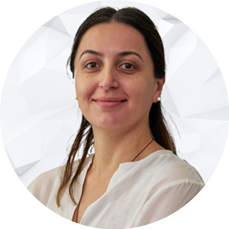
Dr. Nino Bogveradze
Medical University of Vienna, Vienna/AT
Department of Biomedical Imaging and Image-Guided Therapy
Key research areas: Rectal cancer, inflammatory bowel disease (IBD), gastrointestinal imaging

Dr. Francesca Castagnoli
a) Department of Radiology, The Royal Marsden Hospital, London/UK
b) Division of Radiotherapy and Imaging, The Institute of Cancer Research, London/UK
Key research areas: Oncological imaging with a focus on colorectal and skin cancers, whole-body MRI, AI
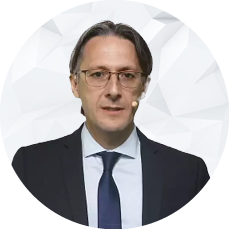
Prof. Dr. Davide Ippolito
University of Milano-Bicocca, Monza/IT
Key research areas: Liver imaging, biliary imaging, emergency radiology, pancreas, rectal cancer imaging, small bowel imaging, artificial intelligence

Prof. Luis Marti-Bonmarti
Hospital Universitario y Politécnico La Fe, Valencia/ES
Key research areas: Imaging biomarkers, image processing, image repositories, oncologic imaging

Dr. Benjamin Rea
University of Sheffield
Sheffield Teaching Hospitals NHS Foundation Trust, London/UK
Key research areas: HPB Imaging (incl. Primary Sclerosing Cholangitis, gallbladder polyps); oncological imaging including uveal melanoma; imaging biomarkers

Dr. Soleen Stocker-Ghafoor
University Hospital Zurich
Institute of Diagnostic and Interventional Radiology, Zurich/CH
Key research areas: oncologic imaging, colorectal liver metastases, pancreatic cancer, rectal cancer

Assoc. Prof. Federica Vernuccio
University of Palermo, Palermo/Italy
Key research areas: Liver, pancreas, GI
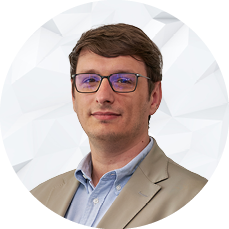
Dr. Roberto Cannella
University of Palermo, Palermo/IT
Department of Biomedicine, Neuroscience and Advanced Diagnostics (Bi.N.D.)
Key research areas: Liver and pancreas imaging

Dr. Kieran Foley
Cardiff University, National Imaging Academy, Wales/UK
Key research areas: Oesophagi-gastric cancer, clinical trials, oncology

Dr. Doenja Lambregts
The Netherlands Cancer Institute, Amsterdam/NL
Key research areas: Oncologic imaging, rectal cancer

Dr. Andrew Plumb
University College London Hospitals NHS Foundation Trust, London/UK
Key research areas: CT colonography, particularly its application to the NHS bowel cancer screening programme, Crohn's disease, including the role of MRI in predicting clinical outcome and response to treatment, photoacoustic tomography for human vascular and oncological imaging

Dr. Daniel Stocker
University Hospital Zurich
Institute of Diagnostic and Interventional Radiology, Zurich/CH
Key research areas: Liver tumors, HCC, colorectal liver metastases, pancreatic cancer

Prof. Vincent Vandecaveye
University Hospitals Leuven, Leuven/BE
Key research areas: Cancer imaging, (whole body) diffusion-weighted imaging for staging, functional MRI in oncology, early response assessment and prediction, lymph node imaging, peritoneal tumours, radiomics and AI development for MRI
Approved mentor–mentee pairs may apply (optional) to be considered for a seed grant of up to €2.500.
The seed grant is intended as support funding, not as a full project grant, and may cover:
- Project-related expenses
- Travel for short visits to the mentor’s institution or to arrange meetings at conferences (e.g. ECR, ESGAR)
- Travel, accommodation and registration for the ESGAR annual meeting
Seed Grant - Eligibility Criteria:
Approved mentor-mentee pairing
Mentor-approved project plan, including research question, milestones, timeline, and deliverables
Institutional support: confirmation from head of department or residency programme that applicant can dedicate sufficient time
Seed Grant – Application and Project Guidelines:
Under the guidance of the mentor, the mentee prepares the seed grant application, consisting of a detailed project plan for a small-scale project that can be completed within approximately one year.
Eligible projects include:
Scientific research projects
Educational projects, provided the topic is novel and/or addresses an unmet educational need, and is potentially publishable as a full length educational or pictorial review
The project topic and outline needs to be mutually agreed upon by the mentor and mentee and needs to fit the overall ESGAR scope (i.e. focus on abdominal/GI imaging).
The mentee is responsible for defining, leading and carrying out the project. The mentee retains primary ownership of the work and should qualify for first authorship of the submitted abstract and, where applicable, any subsequent full-length publication.
Mentors are expected, at a minimum, to provide ongoing guidance and feedback on project planning and execution. More active involvement in project delivery is not part of the core mentoring role but may be agreed upon where it is likely to improve the project’s chances of success. This could include, for example, proposing a project idea or providing access to data.
The online application form will be shared with approved mentor–mentee pairs in early October 2026.
Seed Grant funding will be released in stages. An initial payment will be provided at the start of the project, with the remaining funds disbursed following successful completion of the midterm and final evaluations.
A project evaluation and reimbursement form will be provided.
Mentor–mentee pairs will have one year to complete their project, with the aim of submitting an abstract to the ESGAR Annual Meeting 2028.
At the start of the programme, each pair should:
define realistic and achievable objectives
establish a clear project timeline and
schedule regular meetings, either online or in person, to review progress and adjust the project plan when necessary
The one-year mentoring and project period should ideally include at least one in-person meeting. This may take place during a short visit to the mentor’s institution or at a conference or workshop attended by both participants.
In-person interaction is particularly encouraged for pairs receiving seed grant funding, as the grant is intended, in part, to support these activities.
Project progress will be monitored by designated members from the ESGAR research committee and Young ESGAR coordinating team, including:
A kick-off meeting
A midterm progress report and evaluation
A final assessment after the ESGAR Annual Meeting 2028
Mentor–mentee pairs presenting an oral abstract may also apply for the Junior Research Prize during the abstract submission period in early 2028. A maximum of 5 abstracts will receive a prize worth € 600 each, which will be granted in the form of ‘ESGAR credit’ to be spent on registration for a future ESGAR annual meeting or ESGAR workshop of choice.
Eligibility criteria:
- Abstract results from a project conducted as part of the mentorship programme
- Abstract has been approved by the mentor before submission
- Applicant (mentee) is first author and primary project lead of the submitted work
- Priority is given to first-time abstract submitters
In addition to the general abstract review, applications will be reviewed by designated members of the ESGAR research committee and the Young ESGAR coordinating team based on abstract quality and the accompanying application.
Note: Abstracts submitted as part of the mentorship programme and considered for the Junior Research Prize will not be eligible for the ESGAR Top 20 Abstract competition.
Encouraged full paper submissions
Prize winners are furthermore encouraged to develop their work into a full-length manuscript for submission to European Radiology-Abdomen. Mentors may continue to provide guidance and/or act as co-authors by mutual agreement.
